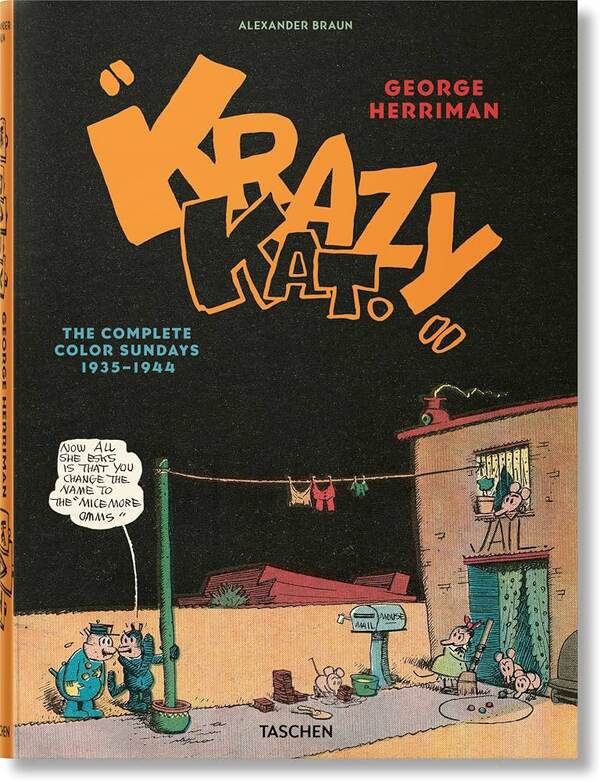
Krazy Kat
George Herriman
A brick, a cat and a mouse become an endlessly inventive comic ritual.
Overview
George Herriman’s newspaper strip centers on Krazy, Ignatz Mouse and Offisa Pupp. Ignatz throws bricks; Krazy reads the gesture as affection; Pupp intervenes. The pattern repeats, but its language, setting and meaning keep changing.
The strip ran from 1913 to 1944, turning a small set of relationships into a large imaginative field.
Why It Matters
Krazy Kat shows how repetition can create freedom in a short comic form. Readers know the players, so the strip can experiment with timing, dialogue and landscape.
Its influence is evident in the critical attention paid to Herriman’s inventive use of limited newspaper space, even though its basic action is almost absurdly simple.
Genre & Themes
The genre is surreal comedy with a love triangle that never settles. The shifting desert is as unstable as the characters’ interpretations of one another.
A thrown brick can be violence, affection or misunderstanding, depending on who receives it.
Art & Visual Identity
Herriman bends panel arrangements and lets the background transform around familiar figures. Sparse marks can make a sudden change of place feel theatrical.
The unusual speech rhythms are part of the visual performance, not merely captions to it.
Read This If You Like
- Surreal newspaper strips
- Language play
- Formal comics experiments
- Recurring comic rituals