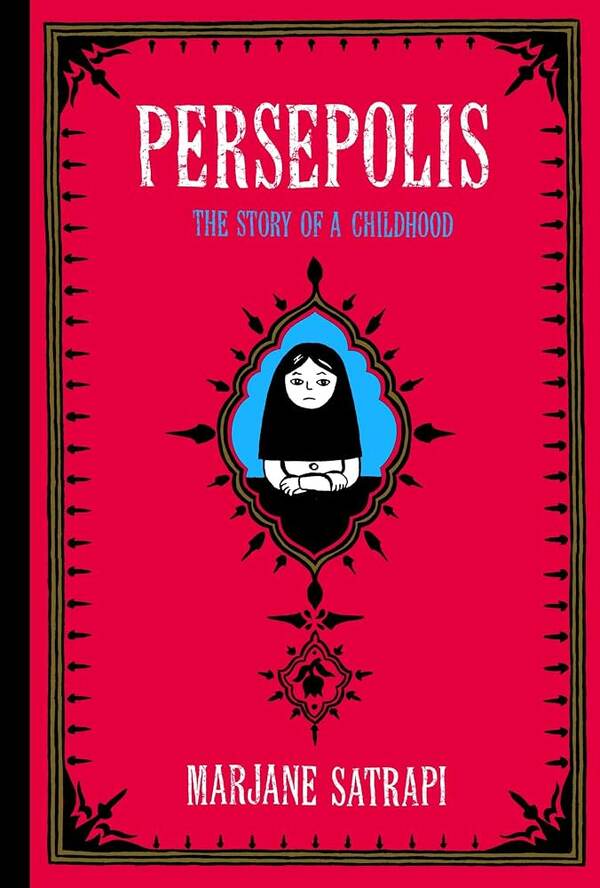
Persepolis
Marjane Satrapi
A child’s view of revolution grows into an account of exile and self-definition.
Overview
Marjane Satrapi recounts growing up in Iran during and after the Islamic Revolution. Family conversations, school rules and public violence enter the story through a young person trying to understand contradictory demands.
The original French volumes began appearing with L’Association in 2000. Later parts follow Marjane as she moves between Iran and Europe.
Why It Matters
The memoir makes political history tangible at the level of daily choices. Its child’s-eye perspective can be funny or blunt, then suddenly reveal the danger behind a rule.
Satrapi also resists reducing an entire country to a single image: family, class, dissent and private life remain visible.
Genre & Themes
This is autobiography and political coming-of-age. Questions of belonging intensify when exile offers freedom while making home harder to name.
The work shows how state power reaches into clothing, education and family relationships.
Art & Visual Identity
Satrapi’s high-contrast black-and-white panels use bold silhouettes and simple forms. The graphic clarity makes emotional shifts immediate.
The style can accommodate a child’s imagination and historical violence without confusing the two.
Read This If You Like
- Graphic memoir
- Coming of age during revolution
- Stories of exile
- Black-and-white visual narratives